
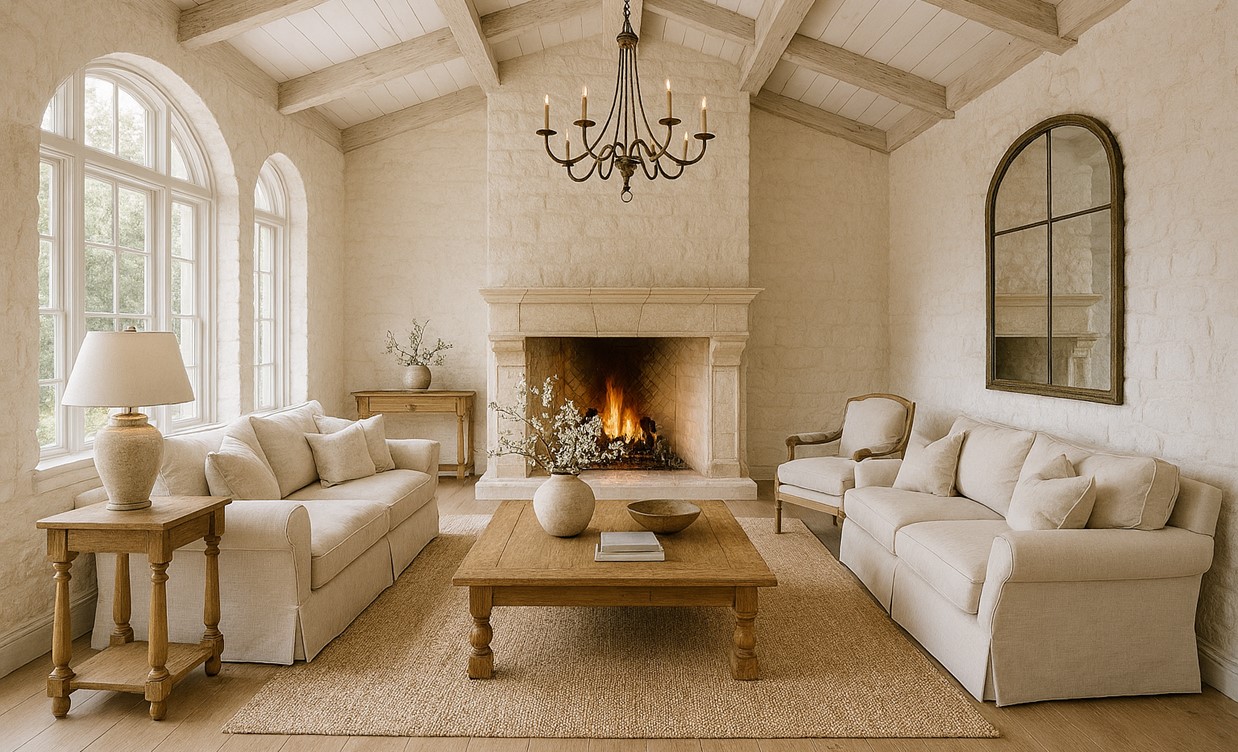
Rustic style, long associated with the idyllic, somewhat naive atmosphere of a country cottage, is undergoing a profound and fascinating transformation. Muted echoes of tradition, the austerity of natural materials, and artisanal precision converge in a contemporary, refined interpretation, creating a new aesthetic quality – rustic style in a premium interior . This is no longer a longing for simplicity, but a conscious choice of luxury defined by authenticity, quality, and profound harmony with nature. By 2026, this trend is gaining in importance, becoming a response to the need to create spaces that are not only beautiful but also bring meaning and solace.
A fundamental mistake is confusing the luxurious rustic style with its literal, folk prototype. This isn’t about an overabundance of wooden logs, floral patterns, and rustic decorations. On the contrary, premium rustic is a discipline of form and a philosophy mastered by designers like Axel Vervoordt and Vincent Van Duysen. Their work demonstrates an aesthetic based on a curatorial approach to space, where the raw beauty of the material and the craftsmanship of human hands become the most important embellishment. Understanding this subtle difference is key to creating an interior that is both modern and absolutely timeless.
Redefining luxury – what is rustic style in a premium interior?
Rustic style in a premium interior is a sublime synthesis of raw, natural textures with elegance, modern comfort, and craftsmanship. It’s a design philosophy that rejects superficial glamour in favor of deeper values: the authenticity of materials, the history of objects, and the sensual experience of space. Luxury here isn’t expressed through ostentation, but through quality that’s palpable, visible in imperfections, and present in an atmosphere of tranquility.
The foundation of this aesthetic is a dialogue between the organic and time-worn, and the precisely designed. Imagine a wall of raw stone, its rough surface subtly touched by light from a minimalist, almost invisible fixture. Or a table made of solid, aged wood with irregular edges, paired with chairs with clean, sculptural lines. It is in these carefully orchestrated contrasts that the unique energy of the premium rustic style is born .
Moreover, this style is one of the most sophisticated interpretations of biophilic design . This concept, based on research into the influence of nature on the human psyche, involves creating spaces that satisfy our innate need for contact with the natural world. The premium rustic interior masterfully achieves this, not through literal imitation, but by fostering a deep, sensory connection with the environment.
Curated Authenticity – The Art of Conscious Choice
At the heart of this philosophy lies carefully selected authenticity. The process of furnishing such a space is reminiscent of the work of a curator in an art gallery. Each object is chosen not at random, but for its form, material, history, and the way it fits into the overall narrative of the interior. Imitations are rejected in favor of the truth of the material. Instead of panels imitating wood, real, often reclaimed boards are used, whose history is ingrained in their grain and cracks. Each element, from a hand-woven wool throw to a ceramic bowl crafted by a local artist, brings not only function but also story to the interior.
Practical application – premium rustic in various rooms
This aesthetic, although universal, manifests itself in a slightly different way in each room, responding to its specific functions and needs.
The kitchen – the heart of the house in a raw setting
premium rustic kitchen is where technology meets craftsmanship. Advanced appliances are discreetly integrated, hidden behind solid wood, patinated metal, or sintered quartz with a natural stone look. Worktops are crafted from impressive stone monoliths, oil-impregnated solid oak, or raw stainless steel, which acquires a refined patina over time. Instead of standard handles, they are crafted by an artisan blacksmith, and on the walls, tiles are replaced by waterproof plaster, such as Moroccan tadelakt .
Bathroom – a home spa with a sensual character
The bathroom becomes a private sanctuary, a place of tranquility. Materials that appeal to the senses reign supreme: stone underfoot, wood as a component of furniture and cladding, and textured plaster on the walls. Carved stone sinks, freestanding bathtubs with organic shapes, and patinated brass or bronze fixtures create a luxurious spa atmosphere. The lighting is soft and diffused, creating an intimate atmosphere, while technology, such as underfloor heating, remains completely invisible.
Bedroom – a sanctuary of peace
In the bedroom, the emphasis is on comfort and maximum tranquility. The focal point is a simple yet sturdy bed, often with a low solid wood frame. Layers of natural textiles play a key role: linen bedding, heavy wool blankets, and cashmere throws. The color palette is exceptionally subdued, based on off-whites, beiges, and grays. Furniture is kept to a minimum – a simple bench at the foot of the bed, a unique stool serving as a nightstand. All this to create a space conducive to deep regeneration.
A sensory experience – more than sight and touch
premium rustic interior engages all the senses, creating a holistic experience. Beyond the dominant textures that invite touch—the roughness of stone, the smoothness of metal, the warmth of wood—olfactory and auditory dimensions are paramount.
The air is filled with the subtle scent of natural wood, beeswax used to preserve it, fresh wool, and leather. These aromas evoke a sense of security and nature, soothing the nervous system. Acoustics are equally important. Natural materials like wood, thick fabrics, and carpets absorb sound perfectly, creating a pleasant, enveloping silence in the room. A step on a wooden floor sounds different than on a synthetic panel—it is deeper, more authentic.
Premium Rustic Style Pitfalls – The Most Common Mistakes and How to Avoid Them
The pursuit of this refined aesthetic is fraught with pitfalls. One false step is all it takes for the noble austerity to turn into caricature or an uncomfortable stage design.
- Pitfall 1: Overwhelming with material. The most common mistake is overusing a single material, especially wood. An interior with wooden floors, walls, and ceilings begins to resemble a heavy, oppressive sauna instead of a cozy retreat. Balance is key – wood needs breathing room and contrast in the form of smooth, plastered walls, raw concrete, or cool stone.
- Trap 2: False history. Succumbing to the temptation of cheap, factory-aged furniture and materials is a surefire way to ruin the entire effect. Premium rustic is based on authenticity. Aged polyurethane beams or knot-printed panels are the antithesis of this ideal. It’s better to invest in a single genuine, vintage piece than to be surrounded by a multitude of imitations.
- Pitfall 3: Aesthetics over comfort. Austere aesthetics shouldn’t mean sacrificing comfort. A chair made from a raw tree trunk may look stunning, but if it’s uncomfortable, it becomes a useless display piece. True luxury is a combination of beauty and functionality – deep, soft sofas, ergonomic chairs, and solutions that make everyday life easier.
Does premium rustic style have to be expensive? Invest in quality.
The word “premium” in the style’s name rightly suggests that this isn’t a budget aesthetic. It relies on high-quality materials and craftsmanship, which come at a price. However, this doesn’t mean it’s reserved exclusively for those with unlimited budgets. The key is to change the way we think about investment.
Instead of buying a lot of cheap, temporary items, this philosophy encourages building a collection gradually. You can start with one or two “statement” pieces that will become the heart of the arrangement. It might be a solid reclaimed wood table, a sculptural designer lamp, or a high-quality wool rug. These key pieces can be surrounded by more minimal, yet aesthetically cohesive pieces in a neutral palette, and over time, they can be replaced with higher-end pieces. This approach treats the home as a long-term project, not a single season.
Where to look for inspiration and products?
Creating an interior in this style requires research and visual education. An excellent source of inspiration is not only social media, but above all, specialized design and architecture magazines such as Ark Journal and selected editions of Elle Decoration , which promote a deeper, curatorial approach to interiors. It’s worth following the profiles of architectural studios from Belgium, Scandinavia, and Japan that masterfully utilize this aesthetic.
When it comes to products, you should turn your attention to design fairs, online platforms for independent artisans, and smaller workshops specializing in the processing of specific materials. It’s there, rather than in chain stores, that you can find unique furniture made of reclaimed wood, hand-forged fittings, and ceramics with unique shapes.
The Polish context – adaptation potential and local inspirations
In Poland, the rustic style in premium interiors has enormous adaptability potential. We embrace the philosophy of simplicity, functionality, and a connection to nature. Poland, with its rich tradition of craftsmanship, provides an ideal backdrop for the development of this aesthetic, which can become a modern interpretation of our heritage.
It’s worth drawing on local resources. Polish oaks, ash, and larches make excellent materials for furniture and flooring. The pottery traditions of Bolesławiec, the weaving of Podlasie, and the blacksmithing of Podhale can provide unique furnishings. Collaborating with local craftsmen and artists not only supports the local economy but, above all, allows for the creation of authentic, unique, and deeply rooted spaces.
Rustic style in premium interiors, reimagined for 2026, is much more than a passing fad. It’s a deeply considered philosophy of creating spaces that respond to fundamental human needs – closeness to nature, authenticity, and tranquility. It’s luxury that doesn’t shout, but whispers, telling a story of materials, craftsmanship, and conscious living. It creates interiors that not only delight with their aesthetics but, above all, become a true home – a haven to which one always longs to return.

Signature Estates editorial team