
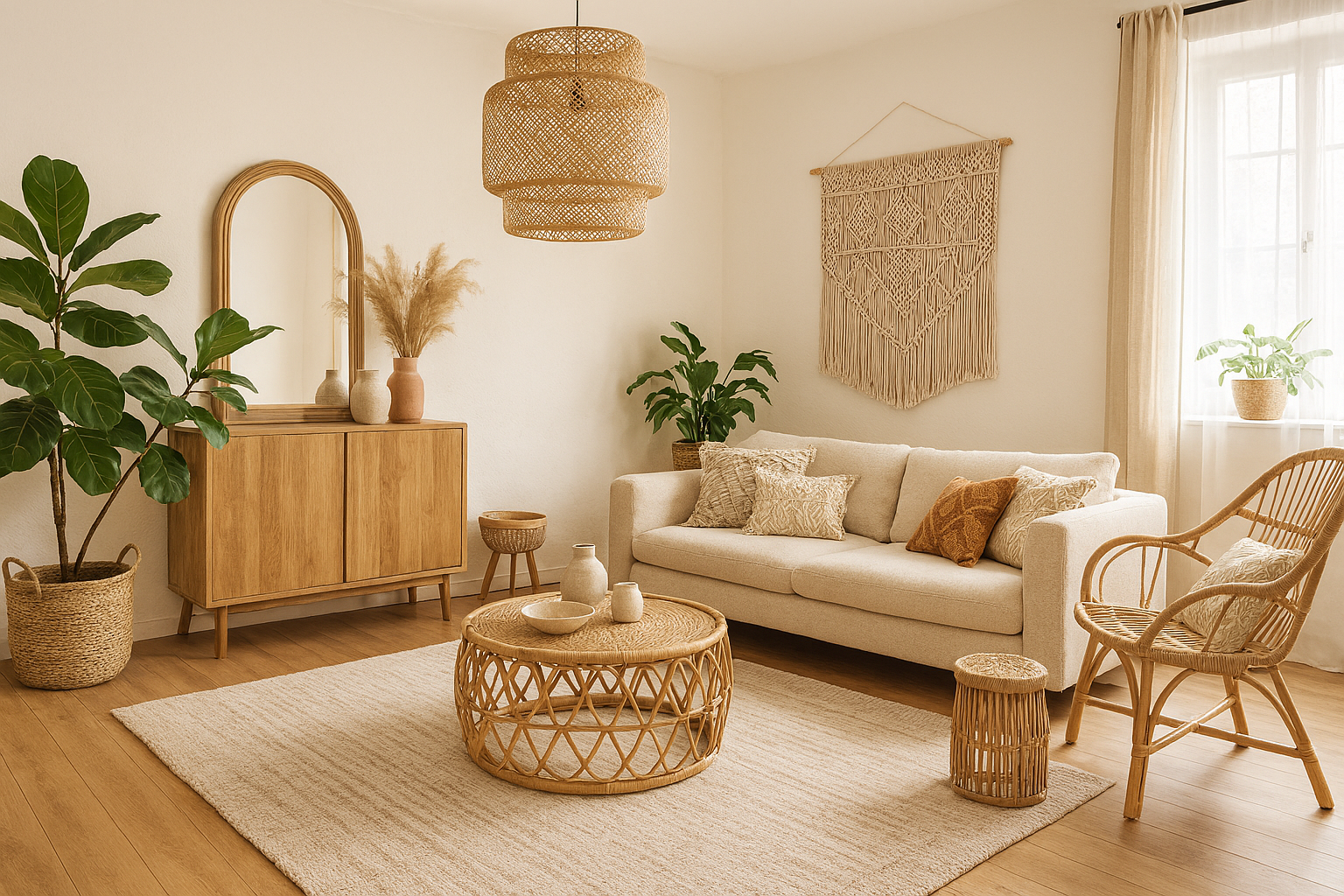
Boho style in interiors is much more than just a fleeting trend in interior design. It’s a philosophy, a manifestation of freedom, and a celebration of individualism that rejects rigid boundaries and minimalist coolness in favor of warmth, personal stories, and a closeness to nature. Often mistaken for a chaotic collection of random objects, it’s actually a conscious, controlled eclecticism in which each element has its place and meaning. It’s a space that lives, breathes, and tells the story of its inhabitants, drawing inspiration from travel, art, and crafts from around the world.
A boho interior is a haven where the senses are gently stimulated by a wealth of textures, earthy hues, and the scent of natural materials. Understanding its essence requires a journey to its roots—to the artistic bohemia that valued creativity over material conventions.
The roots of style: where did bohemian interior design come from?
To fully understand the boho aesthetic, one must go back to 19th-century France. It was there, in the artistic districts of Paris, that la bohème was born —a community of artists, writers, and thinkers who lived outside established social norms. Their lives were a manifesto against bourgeois rigidity, and their homes and clothing reflected this desire for freedom. Inspired by the nomadic lifestyle and vibrant culture of the Roma people, they surrounded themselves with objects that were affordable yet full of character.
This countercultural attitude was picked up in the 20th century by the hippie movement. Like their artistic ancestors, the Flower Children rejected materialism and conformity, turning to nature, peace, and spirituality. They introduced a love of handicrafts, macramé, natural materials, and ubiquitous greenery into the boho aesthetic.
Contemporary boho interior design is a heir to these ideas. It’s a style for travelers , collectors of memories, and individualists who want their home to be an authentic reflection of their personality, not a catalog design.
The foundations of boho design: a symphony of the senses
Harmony in boho style doesn’t come from matching, but from skillfully combining seemingly incongruous elements. The key is to create a cohesive foundation based on three pillars: color, pattern, and texture, which together create a space that stimulates the senses without being overwhelming.
Color palette and the 60/30/10 rule
Warm earthy tones dominate – beiges, creams, browns, rusty terracotta red, as well as muted shades of ochre and olive green. To avoid visual chaos, it’s worth following the proven 60/30/10 ratio:
- 60% is the dominant color, the base—usually white, off-whites, or light grays on the walls and large pieces of furniture. These create a neutral, calming backdrop.
- 30% is secondary colour – usually natural shades of wood, rattan or jute, which add warmth and an organic character.
- 10% are accents – this is where you can allow yourself a bit of madness by introducing stronger colors such as turquoise, deep blue, mustard yellow or coral.
Patterns and textures in practice
Against this backdrop, a true interplay of patterns unfolds. Boho loves ethnic motifs—Moroccan clovers, Aztec geometries, Indian paisleys . These are freely combined with botanical and animal prints. The secret lies in maintaining a common color palette that ties the composition together.
However, what truly defines boho style is the layering of textures. They add depth and sensory dimension to a space. Instead of abstract concepts, imagine a specific scene: a large, flat-woven jute rug lies on the floor, with a smaller, patterned rug casually draped over it. On the sofa, linen pillowcases, a vibrant velvet cushion, and a thick, fringed wool throw lie side by side. It’s this tangible variety that creates a sense of coziness and comfort.
Furniture and Accessories: Curating a Personal Collection
A boho interior is far from sterile. The furniture here doesn’t come from a single set. Quite the opposite – it’s a carefully selected mix of objects with soul: vintage, from flea markets, inherited from ancestors, or brought back from travels. A carved wooden chest of drawers can stand next to a modern sofa, while a rattan peacock chair becomes the focal point of the living room.
Light and Storage: Functional Beauty
Lighting plays a key role. Instead of a single, powerful light source, many smaller light points are used to create an intimate atmosphere. The light color is crucial here – it should be warm, around 2700K , creating a cozy, almost magical effect. Lamps with natural fabric shades, bamboo lanterns, and garlands of light are essential here.
The problem of clutter that can arise when collecting souvenirs is solved through aesthetic storage. Controlled chaos is not clutter . Everyday items, electronics, or documents can be hidden in woven seagrass baskets, wooden chests that double as tables, or chests of drawers with rattan woven fronts.
Nature in two versions: the urban jungle and dried bouquets
The boho style’s connection to nature is inextricable. It manifests itself in two ways: through the lush greenery of living plants and the ethereal beauty of dried grasses and flowers.
On the one hand, we have an urban jungle . The interior is filled with species with impressive leaves, such as monstera, ficus, and strelitzia, as well as palms and ferns. Climbers like epipremnum hang freely from shelves, blurring the line between home and garden.
On the other hand, dried plants are an iconic and often overlooked element. Pampas grass in a tall vase, dried eucalyptus sprigs, palm leaves, or delicate lunaria are absolute must-haves . Their muted colors and interesting shapes perfectly complement the vibrant greenery, introducing a touch of nostalgia and permanence.
Boho in different rooms: adapting the style
The flexibility of boho allows it to be implemented in every corner of the house, adapting it to the function of a given room.
- A boho bedroom: this is meant to be an oasis of peace. A low bed, preferably with a wooden frame or even a pallet mattress, is adorned with a canopy made of natural fabric. The wall behind the headboard is decorated with macrame or dream catchers, and the bedding is a linen and cotton blend.
- The boho living room: as the heart of the home, it should be conducive to gatherings. The focal point is a large, comfortable sofa with plenty of pillows and throws. Next to it is a raw wood coffee table, and around it are pouffes and floor cushions for additional seating.
- Boho bathroom and kitchen: In these utilitarian spaces, style is reflected in the details. Patterned floor or wall tiles, wooden accessories, ceramic soap dispensers, jute rugs, and, of course, moisture-loving plants like ferns and peace lilies.
Boho in a small space – is it possible?
There’s often a fear that boho opulence will overwhelm a small apartment. Nothing could be further from the truth. The key is intelligent space management.
- Light base: White and light beige on the walls will optically enlarge the interior.
- The power of mirrors: Large mirrors in ornate gold or wooden frames reflect light and create the illusion of depth.
- Multifunctional furniture: A wooden box can be used as a coffee table and as a blanket storage unit at the same time.
- Vertical decorations: Instead of taking up valuable floor space, invest in hanging planters, gallery walls, and tall, slim shelves.
DIY: Creative Boho Soul
Boho is a style that encourages creativity. DIY projects not only personalize a room but also align with its philosophy. You don’t need to be a master craftsman. A simple macrame wall hanging, a plant stand woven from string, or a gallery wall composed of dried plants and travel souvenirs—these are details that give a space a unique character. Refurbishing old furniture, repainting it, or adding decorative knobs is another way to breathe new life into it.
Where to look for treasures for a boho interior?
Creating a boho home collection is a true treasure hunt. Authentic pieces are rarely found in chain stores. It’s worth seeking them out in places with soul:
- Offline: Antiques fairs and flea markets are a treasure trove of vintage furniture and unique accessories. Local artisans and small galleries are also worth visiting.
- Online: Craft portals like Etsy and local maker platforms are excellent sources for macramé, ceramics, and textiles. Social media groups dedicated to swapping or selling secondhand furniture also hold some gems.
- Travel: Instead of mass-produced souvenirs, it is worth bringing back hand-woven fabrics, small sculptures, ceramics or jewelry that can become an element of decoration.
Sustainable Boho: Ethics and Aesthetics
The boho philosophy resonates perfectly with contemporary eco- and sustainability trends. It’s a style that inherently promotes conscious choices. Upcycling and refinishing second-hand furniture is not only a cost-saving measure but also a statement against a culture of waste. Choosing natural, biodegradable materials—linen, cotton, wood, jute—is an expression of concern for the planet. Supporting local craftsmanship over mass production helps preserve unique techniques and ensures fair compensation for the creators.
Summary: Boho as a mirror of your soul
Boho style in interiors is an invitation to create a space that is an authentic and honest reflection of ourselves. It’s an aesthetic that celebrates imperfection, the stories imprinted in objects, and the inextricable bond with nature. A true boho interior is never fully completed—it grows and changes with its inhabitants, enriched with new mementos, plants, and inspirations. This style isn’t for everyone, but for those who choose it, it becomes more than just a design—it becomes a home in the truest sense of the word.
Key information
- Boho style is a philosophy that manifests freedom and individualism, departing from rigid boundaries. It is a conscious, controlled eclecticism, where each element holds unique meaning, telling the story of its inhabitants.
- The foundation of the design is warm earthy tones and the 60/30/10 ratio. The key is layering a variety of textures, such as jute, linen, and wool, complemented by ethnic patterns.
- The interiors are characterized by an eclectic mix of vintage and handmade furniture, creating a unique collection. A key element is the presence of lush greenery, live plants and dried grasses, complemented by warm, spot lighting.
- Boho style promotes sustainability by encouraging upcycling furniture and the use of natural materials. It also encourages creativity through DIY projects and the collection of objects with soul, reflecting personal journeys.

Signature Estates editorial team