
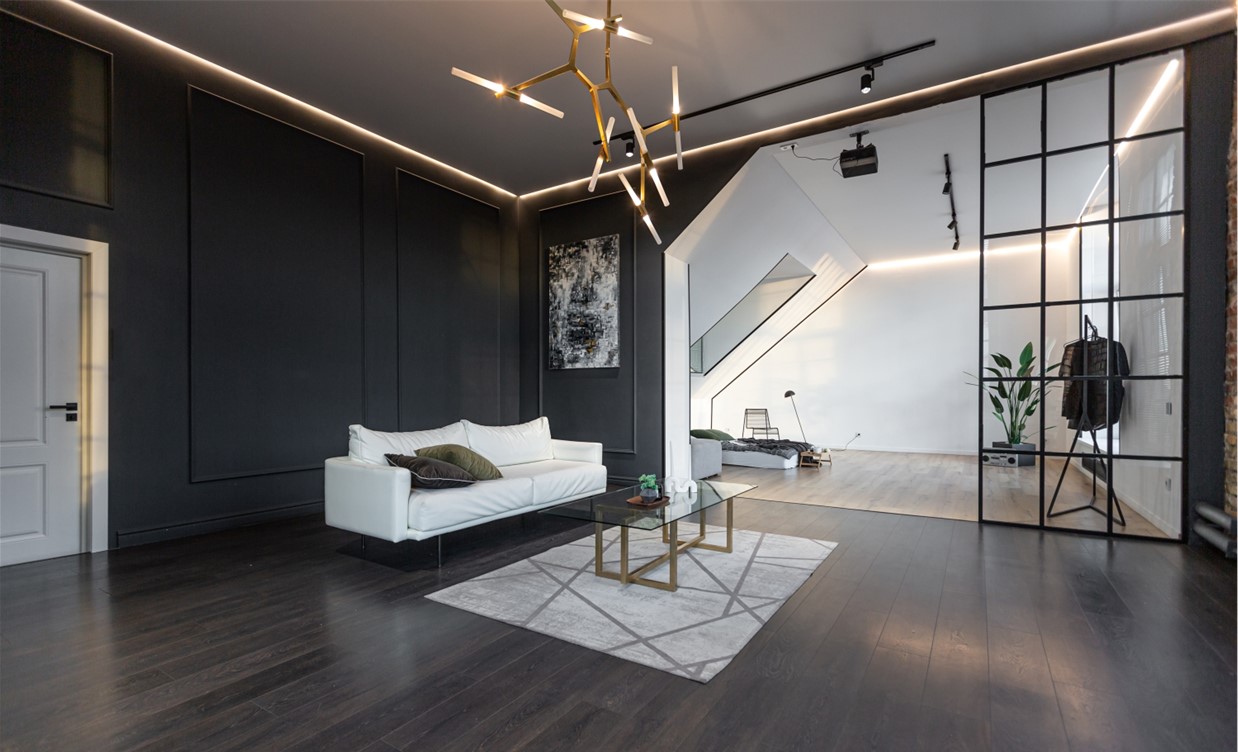
The loft style is much more than a passing fad in interior design; it’s a design philosophy that draws its strength from authenticity, space, and the raw beauty of materials. Its roots date back to the mid-20th century, when New York artists, seeking affordable and spacious studios, began converting abandoned factories and warehouses in SoHo. It was there that an aesthetic was born, celebrating imperfection, the history imprinted on walls, and absolute design freedom.
There’s a common, albeit erroneous, belief that loft style is reserved exclusively for owners of former industrial properties with high ceilings and enormous windows. In reality, its principles are so universal that they can be successfully applied to a standard apartment building or a modern penthouse. The key is understanding its essence, which is based on open floor plans, light, and a conscious manipulation of the contrast between austerity and comfort.
Loft style 2026
The definition of industrial aesthetics is material honesty. Nothing is hidden beneath layers of plaster or wallpaper. On the contrary, what in other styles would be considered a structural element to be concealed becomes the main character in a loft.
Brick and concrete are the soul of a loft interior. The exposed, original red brick walls tell the story of the building. However, their rawness requires a practical approach. Old brick should be thoroughly cleaned and impregnated with a specialized product that will prevent dusting and make it easier to clean. Architectural concrete, whether used on walls or as a floor screed, introduces a cool, minimalistic note. Its surface should also be protected, for example, with polyurethane resin, which will protect it from stains and abrasion.
When budget or technical constraints prevent original materials, alternatives come to the rescue. Clinker tiles perfectly imitate brickwork, and their installation is much simpler than repairing an old wall. Instead of expensive architectural concrete, you can use textured plaster or microcement, which provide a very similar visual effect at a lower cost.
The loft’s structural framework is steel and metal. Black, powder-coated steel profiles are used to create mezzanines, glazing frames, and furniture legs. Raw, unpainted metal appears in the form of ventilation ducts and plumbing pipes, left on display. Wood balances this cool palette, warming the space. Solid oak tables and reclaimed floorboards make the interior more welcoming.
Loft style in a small to small space
Bringing loft aesthetics to a typical apartment requires creativity, but it’s entirely achievable. It’s not about blindly copying solutions from New York penthouses, but rather intelligently adapting key principles.
The foundation is a carefully considered color palette. Whites, grays, and beiges dominate, visually expanding the space and providing a neutral base. Black, graphite, and the natural color of the brick are strong accents. This limited color palette allows for the focus to be on the textures of the materials and the form of the furniture.
Dividing space without tearing down walls
A key challenge in smaller apartments is creating the illusion of open space without costly and invasive renovations. Instead of tearing down walls, you can use less radical but equally effective methods of dividing spaces:
- Furniture as dividers: a tall, openwork metal and wood shelf can visually separate the living room from the kitchenette without blocking the light. A console table placed behind the sofa can work similarly, defining the boundary of the relaxation area.
- Visual boundaries on the floor: a large rug in the living area will clearly define its scope and separate it from the dining or work area. It’s a simple yet extremely effective solution.
- Strategic lighting: Track systems with movable spotlights allow for precise lighting of individual areas. Directing beams of light onto the dining table, sofa, or desk creates functional “islands” in an open space.
- Color accent: Painting one wall a rich, dark color, such as graphite or bottle green, can create a visual “alcove” for a home office or reading nook, giving it depth and distinction.
Minimalism is also crucial. Lofts love to breathe, so avoid excess furniture and decorations. Each item should have its own purpose – functional or aesthetic.
Furniture and Personality: From Function to Expression
Loft-style furniture is a manifestation of simplicity. It is characterized by geometric shapes and durable materials: tables with solid wooden tops on metal legs, sofas upholstered in natural leather or thick fabric, and shelving units supported by steel frames.
However, a stark interior cannot be devoid of soul. It’s these personal touches that make a loft feel like a home, not just a stylized space. So how can you personalize such a distinctive interior?
- Large-scale art: A loft space is the perfect gallery. Large-scale abstract paintings, black-and-white photographs in simple frames, and graphic art and film posters give the interior a unique character. Metal sculptures and installations emphasize its industrial heritage.
- Personal Stories: Travel mementos, book collections, and family photos don’t have to be hidden away. Displayed on an open shelf or a simple wooden shelf, they become an integral part of the design, telling the story of the residents.
- Plants as living sculptures: Stately monsteras, ficuses, and towering sansevierias in simple concrete or metal enclosures bring life, color, and organic form to the interior, contrasting perfectly with the austerity of the materials.
Avoiding Style Pitfalls: How to Avoid Creating a Loft Caricature
If misinterpreted, loft style can easily become cold, unfriendly, or, worse yet, turn into a caricature of itself. There are a few common mistakes to avoid.
The biggest pitfall is the “warehouse effect” – saturating the interior with industrial elements. Too much black metal, concrete on every wall, and a lack of soft accents will make the space feel like a factory floor rather than a cozy apartment. Balance is key. The harshness of the brick should be offset by the softness of a woolen blanket. The coolness of a metal table will balance the warmth of the wooden floor.
The second mistake is ignoring the quality of lighting. A single lamp in the center of the ceiling isn’t enough. A loft needs multiple light sources of varying intensity and color to create ambiance and make the interior functional after dark.
It’s also worth remembering the balance between old and new. A loft is not an open-air museum. Combining reclaimed, industrial furniture with icons of modern design adds freshness to the interior and demonstrates that it’s a living space, evolving with its inhabitants.
The Evolution of the Loft: From New York Factories to European Hybrids
Although the loft style originated in America, its evolution has led to a variety of fascinating interpretations. Understanding these allows you to better tailor the aesthetic to your needs.
- Soft Loft: This is a softened, often more “feminine” version of industrial austerity. White and light beige dominate, with black metal often giving way to white or brass. Soft fabrics like velvet and linen appear more prominently, and furniture shapes become more rounded.
- Industrial Glam: This bold blend of opposites. Raw concrete and brick create a backdrop for glamorous elements: gold accents, marble countertops, crystal chandeliers, and large mirrors in ornate frames. This style is full of drama and elegance.
- Scandi Loft: This hybrid combines an industrial love of space and raw materials with Scandinavian simplicity, functionality, and the philosophy of hygge . The color palette is bright, with plenty of natural, light wood, and the whole is complemented by cozy textiles and minimalist forms.
Creativity in Action: The DIY Spirit in Loft Style
Loft style is perfect for creative individuals who enjoy giving objects a second life. The DIY ( Do It Yourself ) spirit is ingrained in its DNA. Instead of purchasing ready-made furniture, you can create unique pieces that perfectly reflect the character of the interior.
Simple designs like a coffee table made from Euro pallets, a lamp made from copper plumbing pipes, or a shelf made from old crates are not only economical but also lend a space a sense of authenticity. Wood and metal aging techniques allow new objects to acquire a desirable, weathered look. It’s these details that make a space truly unique.
Summary: Philosophy, not just design
Loft style in interiors is proof that true beauty lies in simplicity, honesty, and the history of materials. It’s an aesthetic that teaches us to appreciate space, light, and functionality. Far from rigid rules, it offers a flexible framework that can be adapted to almost any interior, budget, and personality. Whether we live in a former factory apartment or a small condo, its spirit, based on authenticity and freedom, allows us to create an interior with character—powerful, expressive, and deeply personal.

Signature Estates editorial team