
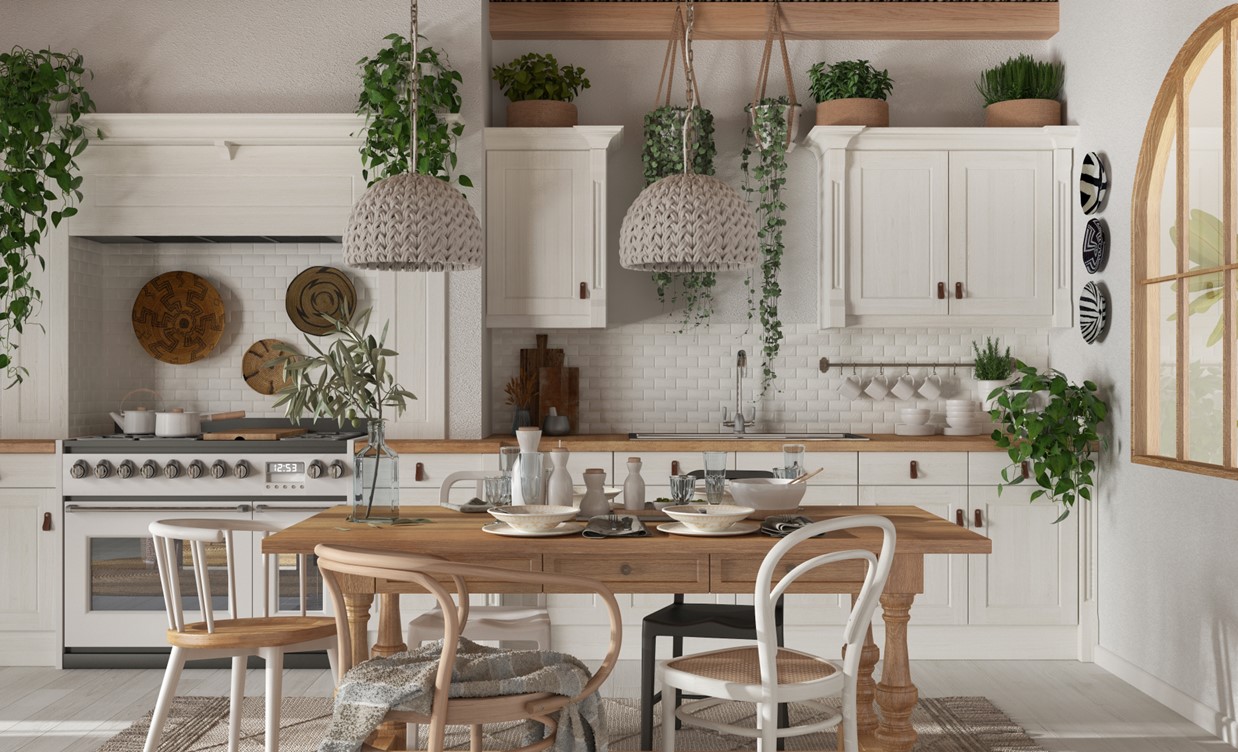
Provençal style, for decades associated with the pastoral charm of southern France, lavender fields, and sun-drenched stone houses, is undergoing a subtle yet significant transformation. In 2026, it’s no longer just a nostalgic recreation of a country cottage. It’s a mature, conscious, and incredibly flexible aesthetic that successfully adapts to the demands of modern life, even in the heart of a big city. The widespread belief that Provençal interior design is reserved for spacious, rustic residences is giving way to a new interpretation—a harmonious blend of traditional warmth with modern minimalism, ecological sensitivity, and discreet technology.
This is no longer a style that clings to the past. It’s a design philosophy that draws inspiration from it to create spaces fit for the future: comfortable, functional, and deeply rooted in nature. It’s a story about how to find the South of France in your own home without creating an open-air museum.
The evolution of the Provençal style – from an idyllic cottage to a city apartment
The roots of Provençal style lie deep in the landscape and culture of Provence. It’s an aesthetic born from a need for simplicity, comfort, and closeness to nature. Historically, it was defined by whitewashed walls that protected against the heat, heavy wooden furniture passed down through generations, and the ubiquitous traces of handicraft. Lavender, olive trees, and cicadas—all of this created a sensual landscape that was reflected in the interiors.
However, the modern interpretation for 2026 moves away from literal copying. Instead, it focuses on capturing the spirit of Provence. Harmony, not historical reconstruction, becomes the essence. Contemporary Provençal interior design is a dialogue between the raw and natural, and the simple and functional. This means lighter forms, a more subdued color palette, and a conscious selection of each element. This is no longer a romantic escape from reality, but a conscious invitation to its best aspects—serenity, authenticity, and balance—into our everyday surroundings.
Provence 2026 Color Palette – Beyond White and Lavender
While classic white and shades of lavender will forever remain in the DNA of this style, the palette for 2026 becomes significantly more nuanced and refined. Designers are embracing colors that still draw from nature, but in a more subtle way, more in tune with contemporary tastes. These are hues that soothe, envelop, and create the perfect backdrop for natural materials.
The modern Provençal color palette is based on subdued, often muted hues that harmonize perfectly with the light and architecture. A graphic color palette for this style could include:
- Shades of green: sage, eucalyptus, olive – bring a breath of freshness and peace to the interior, referring to the hilly landscape.
- Off-whites and beiges: the color of linen, sand or cream provides a perfect, warm base that reflects light without creating a sterile impression.
- Blues and grays: dove blue, stone gray and a graphite accent add elegance and depth, providing a modern counterpoint to warmer tones.
- Earthy accents: terracotta, ochre, and even subtle powder pink, used sparingly in accessories, enliven the composition and add softness.
This color combination creates a cohesive and relaxing atmosphere. Instead of screaming “Provence!”, it whispers of it in a refined way, creating an atmosphere conducive to tranquility.
Materials and textures – a touch of authenticity
Authenticity is key. In 2026, Provençal interior design places a huge emphasis on respect for craftsmanship and the natural origin of raw materials. Materials must be authentic, refined, and, ideally, they must tell a story. Wood, stone, ceramics, and natural fabrics are essential.
Wood isn’t limited to whitewashed furniture. Reclaimed wood, with its knots and traces of time, is increasingly common. Floors made of wide, oiled planks, beamed ceilings, and simple wooden countertops in the kitchen provide a solid foundation for the design. Stone, once dominant as a raw wall, can now appear as a section of exposed wall, a stone countertop, or a hallway floor.
Textures play a crucial role. Walls are covered with an uneven, natural textured plaster (like a distant echo of Moroccan tadelakt ), which beautifully diffuses light and contrasts with the smoothness of the cool stone. Textiles are a realm of linen, coarsely woven cotton, and wool. Linen curtains that freely filter the sun, thickly woven woolen throws, and cotton rugs create layers that add coziness and visual depth to the interior. It’s in this clash of rawness and softness that all the magic lies.
Furniture in the style of modern Provence – the art of conscious selection
Gone are the days when a Provençal interior had to be filled with heavy, ornate, and deliberately aged furniture from a single collection. The contemporary take on this style emphasizes selection and moderation . The goal is to create a thoughtful dialogue between traditionally shaped furniture and elements with clean, modern lines.
Instead of a complete set of stylized furniture, a single, distinctive vintage piece is enough . Consider pairing an authentic Louis XV chest of drawers, found at a flea market, with a simple, upholstered linen sofa. Or a heavy oak table paired with design icons like transparent chairs, which add a light and playful touch to the overall look. Such eclecticism makes the interior dynamic, interesting, and personal. Furniture shapes become lighter, and ornamentation gives way to the beauty of the material itself.
Arranging specific spaces – Provence in the heart of the home
Modern Provence is a universal style that can be implemented in any room, adapting its character to its function.
Provençal Cuisine 2026: The Heart of the Home in a New Look
Instead of traditional milled fronts, smooth, matte surfaces in sage or dove gray are featured. The heavy wooden countertop can be replaced with a durable sintered quartz imitating Calacatta marble or raw stone. Appliances are either fully integrated into the built-in units or, conversely, serve as a free-standing, retro-style accent. Instead of classic tiles, the wall between the countertop and cabinets is lined with hand-formed zellige tiles with an uneven surface that beautifully reflects light.
Provençal-style bathroom: a private spa
It’s a space for relaxation. A freestanding bathtub with a modern, organic shape can serve as the focal point. Brushed gold, matte black, or brass fixtures add elegance. A ceramic countertop washbasin placed on an old, refurbished console creates an interesting contrast. Instead of tiles, the walls can be finished with waterproof textured plaster, giving the interior a warm, Mediterranean feel.
Provençal bedroom: an oasis of peace
Layering and comfort are key here. The focal point is a bed with an upholstered linen headboard or a simple wooden headboard. High-quality bedding made from natural fabrics—linen or cotton percale—is a must. Lighting sets the mood: wall sconces on either side of the bed, perfect for reading, and a table lamp with a ceramic base and a natural fabric shade.
Provence and other styles – what distinguishes it in 2026?
To fully understand the uniqueness of Modern Provençal, it’s worth comparing it to other popular trends.
- Provence vs. Japandi: Both styles share a love of nature, minimalism, and imperfection. However, Japandi is more austere and ascetic. Provence allows for more decorative elements, historical references ( vintage ), and is decidedly warmer and more romantic in its expression.
- Provence vs. Scandi: the common denominator is a bright color palette and functionality. However, Scandinavian style is cooler, more geometric, and focused on simple forms. Provençal design is more sensual, rustic, and draws from a richer palette of textures.
- Provence vs. Wabi-Sabi: Both styles celebrate the beauty of objects with a history and the passage of time. However, the wabi-sabi philosophy is more meditative, dark, and focused on emptiness. Provence is its sunny, brighter, and more optimistic counterpart.
The most common design mistakes – pitfalls to avoid
Creating a modern Provençal interior is an art of balance. It’s easy to fall into several traps that can detract from the overall effect.
- Pitfall #1: “Open-air museum” – the biggest mistake is buying an entire set of furniture from one “Provençal” collection. The result? The interior becomes artificial and soulless, resembling more of a stage set than an authentic home.
- Pitfall #2: “Too much aging” – Excessive and unnatural distressing on furniture that looks factory-applied is a relic of the past. Imperfections should stem from the item’s authentic history, not be an imitation of it.
- Pitfall #3: “Lavender Fever” – lavender is a symbol, not the only style determinant. Too much purple and ubiquitous lavender motifs on textiles or pictures will make the interior look kitschy. It’s worth opting for more subtle touches – a sprig of dried herbs, a scented candle.
- Pitfall #4: “Ignoring context” – cramming heavy, rustic furniture into a small apartment building without any adaptations is a surefire path to disaster. The key is scalability – choosing lighter forms and fewer accessories.
Provence in the spirit of slow life and ecology – more than just a trend
Modern Provence fits perfectly into growing environmental awareness. It’s a style that inherently promotes a sustainable approach to design.
- Upcycling and renovation: Instead of buying new, it’s worth giving old furniture a second life. A restored chest of drawers from your grandmother or chairs from a flea market are not only cost-effective but also truly unique.
- Local crafts: supporting small factories producing ceramics, textiles, and furniture is the essence of the Provençal spirit. It’s a return to a time when objects were made by people, not machines.
- Non-toxic materials: choosing paints with ecological certificates, natural oils and waxes for wood, or fabrics without harmful dyes means caring not only for the planet, but also for the health of household members.
Play of light – the key to the Provençal mood
Lighting plays a fundamental role in a Provençal arrangement. It creates the mood, highlights textures, and brings the space to life. The key is to use several layers of light:
- Main lighting: instead of a richly decorated chandelier, a simple, modern form or a lamp with a natural fabric shade will work better.
- Functional lighting: wall lights by the bathroom mirror, a lamp over the dining table, or a reading lamp in the bedroom. This is light with a specific purpose.
- Ambient lighting: table lamps with ceramic bases, lanterns, and candles create a magical, enveloping atmosphere in the evening.
The color temperature of the light is extremely important. Choose warm bulbs (around 2700K), which produce a cozy, yellowish light that mimics the glow of candles or the setting sun.
Provencal style for every budget – how to achieve the effect without breaking the bank?
Contrary to popular belief, Provençal interior design doesn’t have to be expensive. Natural materials and vintage furniture might seem expensive, but there are many ways to achieve your desired look on a budget.
The secret is ingenuity and patience. Regularly browsing classifieds portals or visiting flea markets can lead to finding true gems at a fraction of the price. Many pieces of furniture can be restored yourself – sometimes a coat of chalk paint and a new handle are enough to give an old piece a new lease on life. Accessories like linen cushions, ceramic flowerpots, or simple vases can be found in popular home improvement chains. Instead of expensive textured plaster, you can choose a paint with a similar effect. This style values authenticity, which often lies in imperfect objects with a history, not necessarily the most expensive ones.
In this way, the Provençal interior design of 2026 becomes synonymous with a space that is not only beautiful but also intelligent – perfectly suited to the needs of the modern man. This is proof that true classics never fade away, but evolve, drawing strength from the past and inspiration from the present.

Signature Estates editorial team