
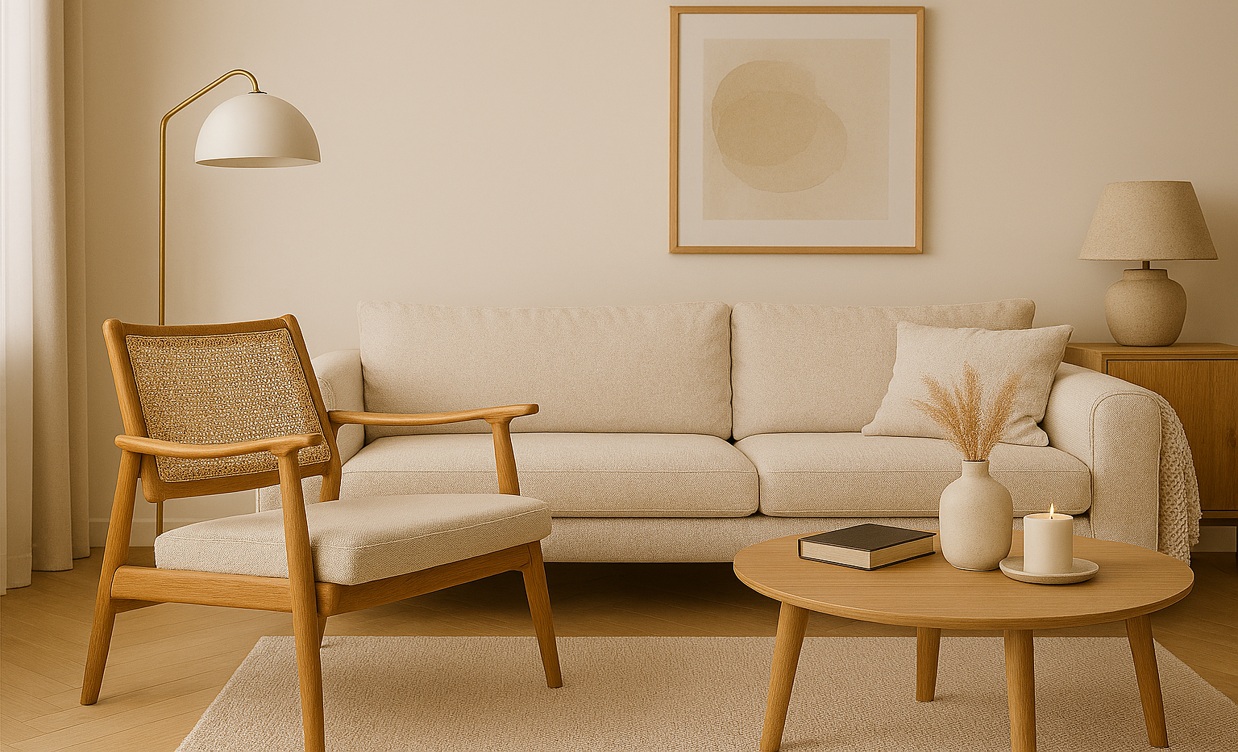
Scandinavian style has been at the top of interior design trends for years, but calling it merely a “trend” would be a significant understatement. It’s a comprehensive design philosophy that draws on values deeply rooted in Nordic culture: a love of nature, functionality, and simplicity. Its timeless appeal lies not in passing fashions, but in the genuine desire to create a home that is an oasis of peace, comfort, and harmony. Scandinavian interiors are a response to the harsh climate and long winters – they become a bright, cozy haven where every element has its place and purpose.
The phenomenon of this style lies in its versatility. It can be simultaneously elegant and casual, minimalist in form yet warm in its reception. It’s an aesthetic that whispers rather than shouts; envelops rather than overwhelms. It invites us to slow down and appreciate the beauty in everyday objects.
Scandinavian Minimalism? We Dispel a Popular Myth
One of the most common simplifications is equating Scandinavian style with stark minimalism. While both styles share certain common characteristics, such as simplicity of form and an emphasis on functionality, their soul and purpose are fundamentally different. The key difference lies in their approach to coziness, naturalness, and human comfort.
Minimalism in its purest form strives for radical reduction. Space is meant to be uncluttered, almost sterile, and materials often have a technical nature. Scandinavian style, while also avoiding unnecessary opulence, prioritizes people. Instead of eliminating, it carefully selects elements that create an atmosphere of warmth and security. This is where the ubiquitous wood, natural fabrics, and sparse yet meaningful decorations come into play. Confusing these two aesthetics leads to interiors that are proper, yet lacking in Scandinavian spirit. Scandinavian interiors are alive, breathing, and inviting to interaction; minimalist, on the other hand, strive for a perfect, untouched composition.
Northern Philosophy: Hygge and Lagom as the Foundations of Style
To fully understand Scandinavian interior design , it’s essential to consider two key concepts that form its philosophical foundation: Danish hygge and Swedish lagom . These concepts lend physical spaces a deeper, emotional dimension.
Hygge , a concept difficult to translate literally, denotes the art of creating coziness and a sense of security. In the context of interior design, it manifests itself through soft furnishings, layered textiles, and the warm, diffused light of candles or lamps. Hygge is a celebration of small pleasures.
On the other hand, we have lagom , the Swedish philosophy of moderation, meaning “just right”—not too much, not too little. Lagom in interiors celebrates balance and conscious consumption. It translates into simple yet durable furniture, practical accessories, and an emphasis on sustainability.
Hygge and lagom are not opposites, but complement each other perfectly. Lagom creates an orderly, functional base, while hygge fills it with warmth and soul, creating a perfectly balanced space.
Design icons and furniture that defined Scandinavian style
While Scandinavian style may seem egalitarian and accessible, its roots date back to the mid-20th century, the era of Mid-Century Modern , when brilliant Nordic designers revolutionized the way we think about furniture. Their works, combining craftsmanship with innovative form, have become timeless icons. It’s worth knowing these names to understand the DNA of this design.
- Alvar Aalto (Finland): A pioneer of organic modernism, he experimented with bent plywood, creating furniture with flowing, natural lines, such as the famous Paimio armchair.
- Arne Jacobsen (Denmark): architect and designer, creator of some of the most recognizable furniture in history: the Egg and Swan armchairs and the minimalist Ant chair .
- Hans Wegner (Denmark): Master carpenter who designed over 500 chairs, including the iconic Wishbone Chair , a quintessence of Danish craftsmanship.
- Poul Henningsen (Denmark): His revolutionary approach to lighting resulted in the PH lamp series, including the famous PH Artichoke , designed to produce a soft, glare-free light.
Today, this design is accessible thanks to premium brands like Fritz Hansen, Carl Hansen & Søn, and Muuto, which continue the legacy of these masters. At the same time, brands like IKEA have democratized the style, bringing its key principles—simplicity, functionality, and a clear aesthetic—to millions of homes worldwide.
A palette of colors and materials – a symphony of nature in the interior
The essence of Scandinavian style is its strong connection with nature, which is reflected in the dominant palette of colors and materials.
Colors: light-inspired base
The color base is light and neutral, which has practical reasons. In Nordic countries, white walls act like a mirror, reflecting and intensifying every ray of sunlight. Therefore, white in various shades, a wide range of grays, beiges, and other earthy tones dominate. Against this neutral backdrop, subtle color accents appear, often inspired by nature: muted blues, sage greens, powdery pinks, and mustard yellows.
Materials: a touch of authenticity and craftsmanship
Materials must be authentic, pleasant to the touch, and age beautifully. Wood is the undisputed king here , especially light-colored species like birch, ash, pine, and oak. Finishing is key; popular methods include oiling , which highlights the natural grain, bleaching for an even brighter effect, and matte varnishing , which creates a subtle, modern finish.
Alongside wood, natural fabrics play a key role: linen, wool, cotton, and leather. Other natural accents complement the design: ceramics, glass, and metal—usually black or brass, used to add graphic contrast.
The role of patterns: a subtle accent inspired by nature
While Scandinavian style avoids excess, it isn’t entirely devoid of patterns. However, they are used sparingly and typically appear on textiles (cushions, rugs) or wall art. Simple, often graphic, motifs predominate:
- Geometric patterns: stripes, dots, triangles, herringbone.
- Motifs inspired by nature: stylized leaves, twigs, silhouettes of forest animals.
- abstract, linear compositions. These patterns almost always appear in a subdued, two- or three-color palette, harmonizing with the rest of the interior.
Light – the key architect of Scandinavian space
In Scandinavia, light is a luxury. Therefore, interior design is inextricably linked to maximizing it. Large windows, free from heavy curtains and drapes, are standard. Artificial lighting is equally important, and must be multi-level and create a mood.
A key, often overlooked aspect is the color temperature of the light . To create a hygge atmosphere , it’s essential to choose light bulbs with a warm color (2700-3000 K) . It’s this warm, golden glow that makes a room feel cozy after dark. Instead of a single, central source, layered lighting is used, which is divided into three types:
- General lighting: Provides even light throughout the room (e.g., a minimalist ceiling lamp or track system).
- Task lighting: Focused on a specific area, such as a pendant lamp over a dining table, a wall lamp over a kitchen counter, or a floor lamp by a reading chair.
- Accent (mood) lighting: Small table lamps on a dresser, wall lamps illuminating a picture, or string lights that together create a cozy, diffused glow.
Scandinavian style in individual rooms
The principles of Scandinavian style can be successfully applied in every corner of the house, adapting them to the function of a given room.
The living room – the heart of the home
hygge philosophy is most evident. The key piece of furniture is a large, comfortable sofa in a neutral color (gray, beige), covered with plenty of pillows and a wool throw. It is complemented by a lightweight coffee table (often made of wood or with a metal base), a simple rug, and an iconic armchair.
Bedroom – an oasis of peace
A Scandinavian bedroom is synonymous with relaxation. The focal point is a bed with a simple wooden or upholstered frame. Layering the bedding plays a key role – linen or cotton sets in muted colors, a bedspread, and a few decorative pillows create a feeling of comfort. Instead of heavy curtains, light blinds or airy fabrics appear on the windows.
Kitchen – functionality and simplicity
A Scandi-style kitchen is, above all, ergonomic. It’s characterized by smooth, light-colored cabinet fronts (often white or light gray), often devoid of traditional handles (replaced by milling or a push-to-open system). A wooden countertop or wooden accents add warmth. The wall above the countertop often features simple white subway tiles or a smooth surface.
A green accent on life – the role of plants in a Scandinavian home
Houseplants are an essential element of Scandinavian interiors. They bring life, color, and organic shape to an otherwise uncluttered space, forming a natural bridge between home and the outside world. Popular species include those with expressive, sculptural leaves, such as monstera, ficus lyrefolia, ferns, and sansevieria . They are displayed in simple ceramic or terracotta pots that enhance their natural beauty, avoiding decorative enclosures.
Style Evolution: Japandi, Scandi-Boho and Dark Nordic
Scandinavian style is not a monolith. It evolves, absorbing new inspirations. Alongside familiar hybrids like Japandi (a fusion with the Japanese aesthetic of wabi-sabi ) and Scandi-Boho (a fusion with the artistic freedom of boho), a new, intriguing trend has emerged: Dark Nordic . This is a darker, more dramatic take on the style. The bright base is replaced by deep, saturated colors: graphite, anthracite, bottle green, and navy blue . While maintaining the simplicity of forms and natural materials (especially dark wood and black metal), this creates interiors with a refined, enveloping character.
Sustainability and vintage – a second life for furniture
lagom philosophy naturally leads to a sustainable approach to consumption. Scandinavians value objects with a history that bear the marks of time. That’s why vintage furniture and accessories play such a crucial role in their interiors . A refurbished chest of drawers from the 1960s, chairs found at a flea market, or family heirlooms add an authenticity and individual character to a space that can’t be bought in a store. It’s a conscious choice for durability over fleeting fashion.
The most common mistakes to avoid
When decorating an interior in the Scandinavian style, it is easy to fall into several traps that distort its spirit.
- Too sterile: Creating a “white box” without warm accents. Remember, a Scandinavian interior is meant to be cozy, not hospital-like. Wood, textiles, and plants are essential.
- Ignoring texture: Focusing solely on color, forgetting about the variety of textures. Smooth surfaces should be broken up with the thick weave of wool, the roughness of linen, or the natural grain of wood.
- Too much decoration: Overdoing it with hygge can lead to clutter, which contradicts the principle of lagom . Every item should have its place and purpose.
- Cool lighting: Using neutral or cool-colored light bulbs (above 4000K) is the ultimate sin against the Scandinavian atmosphere. Only warm light creates the desired ambiance.
Summary: How to Create Your Own Scandinavian Oasis Checklist
Creating a Scandinavian-style interior is a process of creating a space that reflects the philosophy of simple, good living. It’s a home you want to return to—bright, cozy, and thoroughly authentic. Here’s a condensed checklist:
- Base: Choose light walls (white, light gray) and a wooden floor.
- Materials: Introduce lots of natural wood (furniture, accessories), woolen blankets, linen curtains and cotton rugs.
- Furniture: Choose simple, functional designs. Invest in a comfortable sofa and at least one designer accent (an armchair, a lamp).
- Light: Maximize daylight. Plan for multi-point, warm-toned artificial lighting (2700-3000K).
- Accessories: Keep them to a minimum. Opt for personal mementos, prints, ceramics, and plenty of live plants.
- Philosophy: Remember balance – lagom in order and functionality, hygge in coziness and atmosphere.
Key information
- Scandinavian style is a comprehensive interior design philosophy, deeply rooted in Nordic values such as a love of nature, functionality and simplicity, creating spaces full of peace and comfort.
- The key difference between Scandinavian style and strict minimalism is the priority of coziness and naturalness, with an emphasis on human comfort, which is manifested through carefully selected elements that create a warm atmosphere.
- The philosophical foundations of Scandinavian style are the Danish hygge , the art of creating coziness, and the Swedish lagom , meaning moderation and balance, which complement each other perfectly, creating balanced interiors.
- The dominant color palette is based on light, neutral tones such as white and gray, which enhance light, while the undisputed king of materials is light wood, complemented by natural fabrics and metal accents.
- Light is considered a key architect of the space, maximized through large windows and multi-level artificial lighting. Only warm-toned (2700-3000K) light bulbs are used to create the desired hygge atmosphere .
- Contemporary Scandinavian style is evolving, incorporating new trends such as Japandi and Dark Nordic , while maintaining the principle of sustainability and appreciating vintage furniture and objects with a history, which demonstrates a conscious approach to consumption.

Signature Estates editorial team